




Orange Garden Ideas - What's Your Color?
Learn about ways to use orange in your garden with orange garden ideas, along with some plants with orange flower you can use that have orange flowers or foliage.
 Using Orange in the Garden
 Using Orange in the Garden
Shrubs, especially evergreens, are usually considered the backbone of the garden since they add structure and help define spaces in orange color garden design. Plants with colorful flowers and foliage, including orange flowers for the garden, add the decoration, give your garden panache and style. Different colors lend different looks, feels and impact to your beds, borders and containers when planning orange garden ideas. While orange might not be the most popular color for gardeners (pink and purple regularly top the list of favorites in our surveys of gardeners), it is a color that could easily be used more often in orange garden design.
You might be asking "Why use orange?" Orange is a warm color and a bright color. Warm and bright colors draw attention, so plants with orange flowers are a great way to help highlight areas of interest. Need a subtle way to indicate that people should head to the kitchen door instead of the front door? Use orange by the kitchen door and blue (a cool color) by the front door. People will naturally be drawn to the orange and will be more likely to head to the door nearby. Is there a step that regularly trips people? Try planting orange flowers for the garden near it, with cooler colors in the nearby areas. The orange plants will help draw attention to the step and may help keep people from tripping. Do you have a seating area in an out-of-the-way spot? Orange can help draw attention to that spot. In other words, it is a living highlighter, of a sort.
 Bright colors also make things feel smaller or closer to you than they would feel if a dark color was used. If you have an expansive area you would like to feel cozier, use bright colors to make it feel more so. If you have beds or containers farther away from your main living areas, using bright colors like orange can help those areas feel closer to you when applying how to use orange in the garden.
Bright colors are also warming and festive. Is your patio the place you hold parties? Use orange and other bright colors to help set the mood in your orange garden design. There's nothing like the right decorations to indicate tone. That the decorations are alive in this case, is just happenstance. Orange will get the party started, even before you pour the margaritas and set out the guacamole!
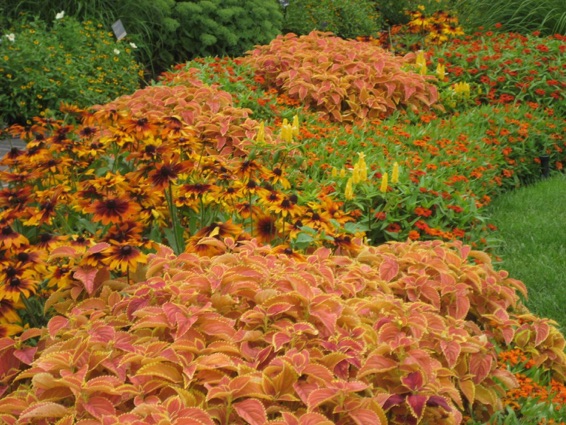
One last thing to remember, orange as a color class isn't just bright orange. It is also apricot, burnt orange, red-orange, salmon, coral, pumpkin, tangerine, persimmon, flame and a whole host of other shades of color used in orange garden design. As you can see from the photo at the top of this article (photo taken at the Cincinnati Zoo) orange is not at all boring or monolithic in orange garden ideas.
The question then becomes - how to use orange in your garden, which means talking a bit about color theory in orange garden design. There are a few ways to use color and we will start with the easiest one - Monochrome.

Monochrome Planting - Different Shades of a Single Color Mixed Together
This is the simplest way to mix color in orange garden ideas. All you have to do is choose three or more colors of orange and mix them together in a planting with plants with orange flowers. Why three or more? What's wrong with two? With two colors you need to pay attention to whether those two colors work well together or not. If you use more than two shades of orange, you'll have enough diversity of tones not to need to think about whether the colors chosen clash in your orange color garden design. The photo at the top of the article is a pretty good example of a monochrome orange landscape bed.
The combination planter to the left uses both flowers and foliage to create an interesting monochrome orange planting with orange flowers for the garden.
You can see more monochrome planting ideas here.
Analogous Plantings - Use Colors Next to Each Other on the Color Wheel
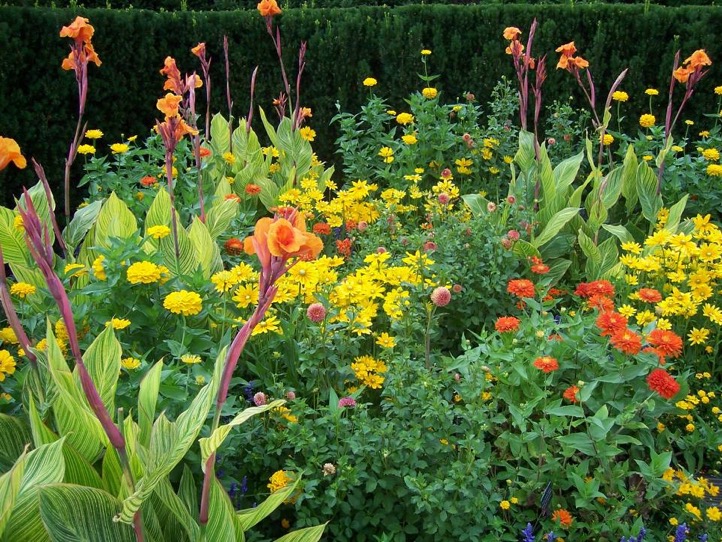
Using a very simple color wheel, with six colors (orange, yellow, green, blue, purple (violet) and Red) to keep things easy to understand orange color garden design. The colors I listed go around the color wheel which places orange between yellow and red. Analogous color schemes can use more than two colors that are next to each other. Here are a few color sets that would be considered analgous: orange and red; orange and yellow; red, yellow and orange; violet, red and orange when learning how to use orange in the garden. Because analogous colors are next to each other on the color wheel they harmonize beautifully in orange garden ideas. It's taking a baby step away from monochrome plantings. The photo on the rigth is a great example of the analaguos duo of yellow and orange at the Chicago Botanic Garden.
The photos below each use a three color set of analogous colors, in both cases here we are showing red, orange and yellow together. The photo on the left is from the Champaign County Master Gardener Idea Garden and is of a wide-ranging and varied bed, using multiple types of plants and a wide array of hues in these three color classes. The one on the right is from the Oregon Garden and is a mix of Celosia. It is a really simple combination and absolutely gorgeous. What you can't see, is that this colorful bed marks the entrance to the restrooms - bringing attention to the area without making use of signage to point the way through plants with orange flowers for the garden.


Here One of the easiest ways to show different ideas for mixing analagous color combinations is using some of our container recipes. You can see 15 different container recipes utilizing analagous color schemes here to inspire.
Complimentary Colors - Are Opposite Each Other on the Color Wheel

Now if you are looking for drama in your garden, use complimentary colors. These colors are on opposite sides of the color wheel and the contrast in colors really makes the colors pop in orange color garden design. For pure eye-catching ability this is the color scheme you want. With orange, the complimentary color on our color wheel below is blue. The photo on the right is from my garden. This planting uses Unplugged® So Blue™ Salvia and Luscious® Marmalade™ Lantana. You can see how much the royal blue makes the orange stand out - the saturated side of orange and blue are a great example of how to use orange in the garden. Keep in mind that color in your garden doesn't just come from flowers and foliage, it also can come from paint and pottery and garden ornaments.
Color Triads - Colors on Each Point of an Equilateral Triangle Within the Color Wheel

This is the most complicated color scheme we are going to consider. Using our color wheel orange, violet and green make up the triad. Green is easy, since most foliage is green, so this triad is a bit of a "cheat." We really only have to find orange and violet flowers such as plants with orange flowers. Here ia an of this triad in the landscape at the University of Laval in Quebec, Canada. In person the goldish orange flowers were a bit more orange than they look in the photo. I like showing some real-life photos (even if they aren't perfect) so that you can see that color theory isn't just something to talk about, it actually does work in orange garden ideas.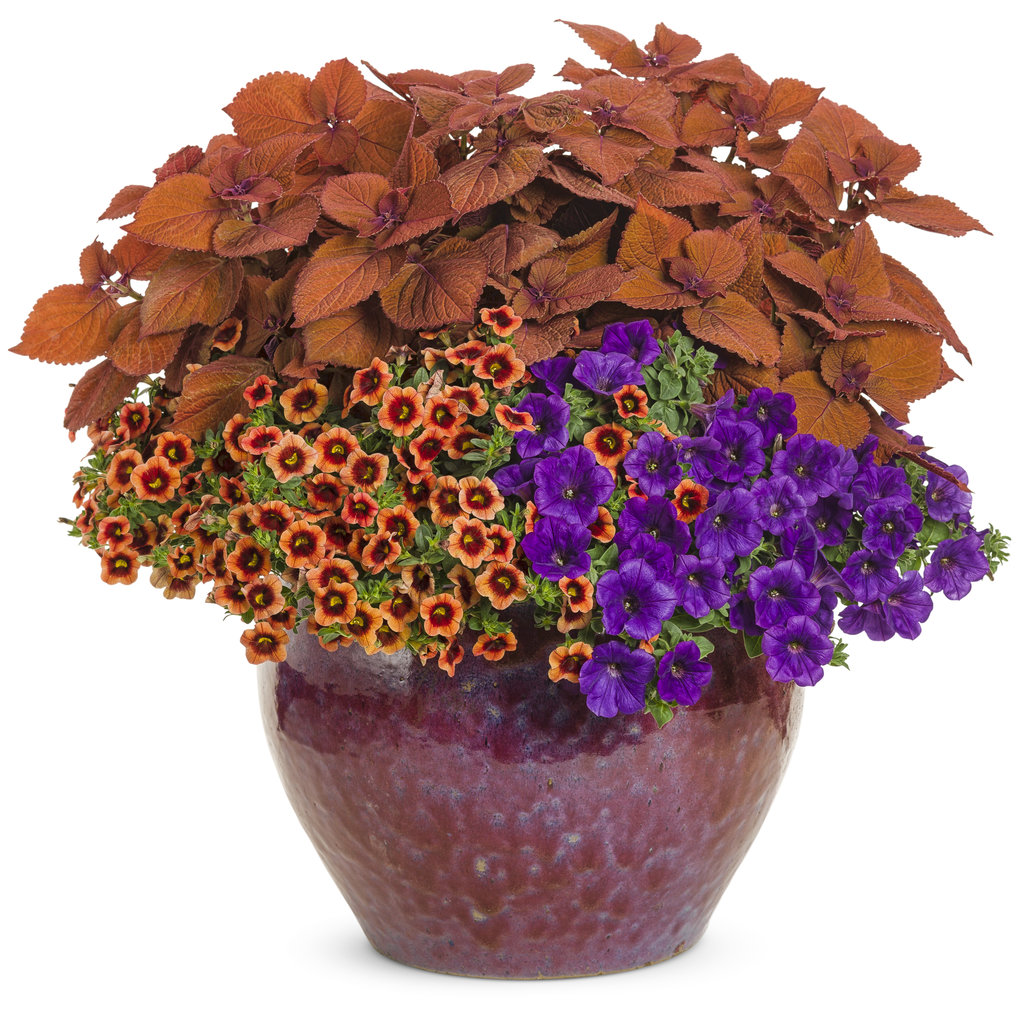
Here's an instances of the orange/violet-purple/green triad in a combination planter. This recipe is the Jazz Band combo, which uses a vibrant purple with two different shades of orange and then green foliage along with orange flowers for the garden. You can see more combination recipes featuring this color triad here.
I hope this helps you envision many different ways that you can use orange in your gardens.
To see what orange plants are available, click here.